|
Module Four |
|
For this module you will want to read chapters twenty-six through twenty-eight of The American Promise. At the Blackboard site there are corresponding objective quizzes for the readings. Make sure you take them by the deadlines posted. If you decide to take the module exam, review the study guide and do so during the required period of time. |
|
Charles Beard on the Cold War: “Perpetual war for perpetual peace.” |
|
|
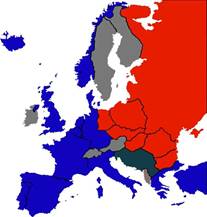
· Advertising made clear where a woman’s “true” place was · Lines became clearer and hardened over Berlin · Rickover and the Birth of Nucelar Power (28:26) · Mohammed Mossadegh and Jacobo Arbenz Guzman put the Cold War in a different light · The “Kitchen Debate,” parts one and two, gives a different light |
|
|
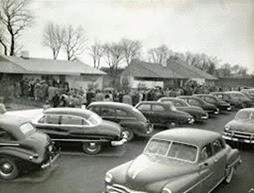
· Technology, laying claim to a new generation · Divided Highways (parts 6-9, 14:46) · American Experience: Satellite Sky (42:50) · Suburban America: Problems & Promise (parts 6-10, 16:45) · While many remember Jackie Robinson who remembers Larry Doby? |
|
|
|
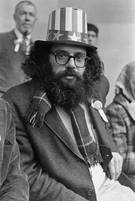
I saw the best minds of my generation destroyed by madness, starving, hysterical naked, dragging themselves through the Negro streets at dawn looking for an angry fix, angelheaded hipsters burning for the ancient heavenly connection to the starry dynamo in the machinery of night. . . “Howl”—Allen Ginsburg |
|
· Rachel Carson and Silent Spring · “When Our Rivers Caught Fire” · from The Environment: A Historical Perspective watch episodes five through eight (12:58) although the entire episode may help you with your term paper; · from NASA's archives: Apollo 11 - The Eagle Has Landed (28:23) · This introduction from The American Experience sets Richard Nixon’s China overture in context · Calls for civil rights were not all based on the color of one’s skin |
|
|
|
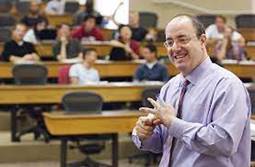
Larry Kramer, Dean at Stanford Law School, walks his class through the complicated legal twists and turns created by the Supreme Court's Brown v. Board of Education decision, presented by the Gilder Lehrman Institute of American History. |